If you own a business in Florida, you have probably wondered what it would take to sell it. Most owners I talk to have thought about it for a long time before they say it out loud. This guide covers how a sale works, what buyers look at, and what you can do now to make it go better.
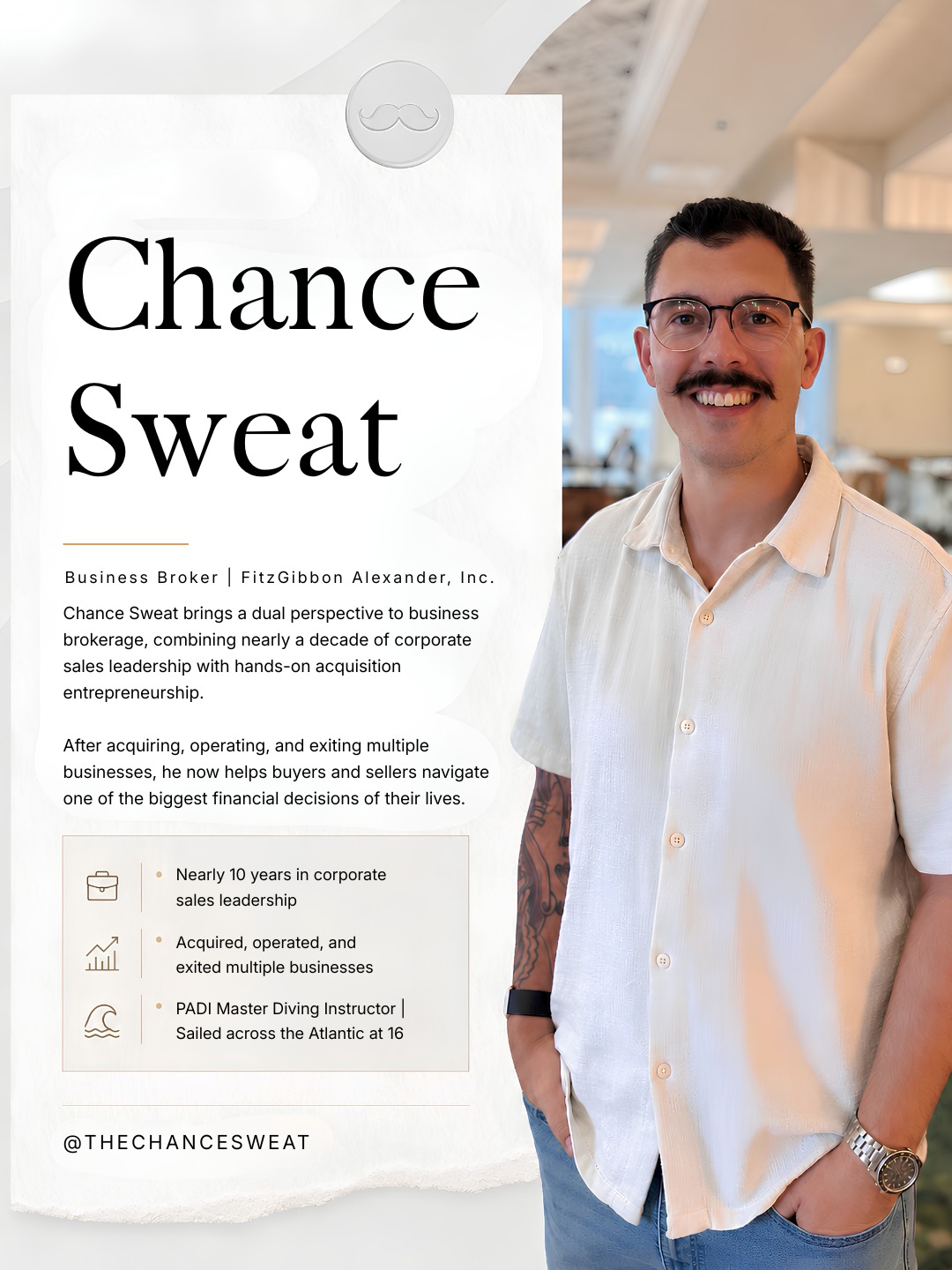
My wife and I bought a struggling small business during Covid and built it to the point where it could run without us. That gave us choices when life got hard, including taking three months off. I have also sold businesses of my own, so I know how a sale looks from the owner's chair. I will explain it the way I wish someone had explained it to me.
Start with why, and why now
Before price, timing, or buyers, get clear on what you want. Some owners want to retire. Some want out of the daily grind but plan to stay involved for a while. Some have a buyer in mind already, like a manager or a family member. Others just want to know what the business is worth so they can decide.
Your answer changes the plan. A sale for the best price on a longer timeline looks different from a quick sale to a known buyer. Write down what a good outcome looks like for you, your team, and your customers.
What buyers look at
A buyer is deciding how likely the business is to keep earning after you leave. Here is what they study.
- Financials. Several years of tax returns and profit and loss statements that match each other. Buyers want a clear picture of what the business earns, and who will run it after the sale is part of that picture.
- Dependence on the owner. If every customer call, quote, and decision goes through you, a buyer sees risk. A business that can run without you tends to be worth more and is usually easier to sell.
- Customers. Who they are, how long they stay, and whether one or two of them make up most of the revenue.
- Team. Who does the work, who is likely to stay, and what they are paid.
- Lease and location. How much time is left, whether the landlord will transfer or renew it, and what rent looks like going forward.
- Licenses and contracts. What can be transferred to a new owner and what has to be reissued.
- Clean records. Organized books and documents speed up a deal and keep buyers calm. Messy ones slow it down.
The eight steps of a sale
-
Consultation
We talk about what you built, what you want next, and whether now is the right time. It is confidential, and there is no cost to a consultation. Many owners decide to wait. That is a fine answer, and you leave with a plan.
-
Recast and a broker's opinion of value
I look at your books the way a buyer will and recast them, so the earnings a buyer can count on are clear and documented. A broker's opinion of value gives you a defensible number and the reasons behind it. We also fix what we can before going to market: records, owner dependence, and how your team's role will be described.
-
Pricing and the listing agreement
You set the price with my recommendation, grounded in your recast earnings and comparable sales of similar businesses, and we put our agreement in writing before anything goes to market.
-
Marketing materials
I prepare what buyers see: a short confidential description that does not name your business, and the detailed package a buyer receives after signing a confidentiality agreement.
-
Marketing and screening
I take your business to qualified buyers quietly. I do not contact your staff, customers, or competitors without your say-so, and I screen buyers for funds and fit before they see details.
-
Buyer meetings and offers
Serious buyers meet you and see the business. We go through offers together, and the best offer is not always the highest number. Terms, structure, and the buyer's fit with your business matter too.
-
Diligence and financing
Once you accept an offer, the buyer checks the records, the lease, licenses, and contracts. If the buyer uses SBA financing, that adds its own checklist. I keep the process moving and answer what comes up.
-
Closing and transition
Financing, lease transfer, legal documents, and the transition plan get worked out. I stay on it until we reach the closing table, and I walk you through the handover period we agreed on.
How long does it take?
It depends on the business, the buyer, and how ready your records are. Preparation and a broker's opinion of value come first, then marketing, then diligence and closing. I would rather give you a timeline for your business after a conversation than quote a number that may not apply to you. Businesses that are organized and priced realistically tend to move faster.
How a deal is usually structured
- Cash at closing versus seller financing. Some buyers pay part over time. That affects your risk and your terms.
- Earnouts. Part of the price depends on how the business performs after the sale.
- Transition period. How long you stay to introduce the new owner and train them, and what you are paid for it.
- Non-compete terms. What you can and cannot do after you sell.
- Real estate and equipment. Whether they are included, leased, or sold separately.
Your attorney and CPA should review the structure. Tax treatment can change what you keep, and that is their job, not mine. A good broker works with them, not around them.
What can slow or stop a deal
- A lease that cannot be transferred or has too little time left.
- Books that do not match what the buyer was told.
- A key employee leaving during the process.
- Price expectations that do not hold up under diligence.
- Word getting out to staff or customers before you are ready.
Most of these can be avoided if you plan before you go to market.
Selling an insurance agency?
Agencies are sold differently, because the buyer is buying a book of business, carrier relationships, and renewals. I wrote a separate guide: How to Sell an Insurance Agency in Florida.
What to do this month
- Write down what you want from a sale and when.
- Pull the last three years of tax returns and financial statements into one place.
- Read your lease and note the end date and renewal terms.
- Think through which tasks only you do, and who could take them over.
- Talk to a broker, and to your attorney and CPA.
Common questions
Do I have to tell my employees or customers?
Not at the start. A confidential process is the point. You decide when and how to share the news. I advise you on timing and approach.
What does it cost to talk?
There is no cost to a consultation, and ask me about a broker's opinion of value.
Do you only work in Orlando?
I work with owners across Florida. Orlando and Central Florida are home base, and the brokerage also has an office in Daytona Beach.
Can I stay involved after I sell?
Often, yes. Many sales include a transition period, and the length is part of the deal.
What is my business worth?
It depends on earnings, how much rests on you, your customers, and the buyers who are looking. I do not give a number without seeing the details.
Talk to Chance
If you are thinking about selling, or just want to know where you stand, let's talk. It is confidential, and there is no obligation. (407) 538-9876 or Chance@FitzGibbonAlexander.com.
Chance J. Sweat is a licensed Florida business broker with FitzGibbon Alexander, Inc. 11602 Lake Underhill Rd., Suite 102, Orlando, FL 32825. 1326 S. Ridgewood Ave, Suite 10, Daytona Beach, FL 32114.
This article is general information, not legal, tax, or financial advice. Talk to your own attorney and CPA.